🗽 New York City’s annual India Day Parade brings together thousands of people to celebrate India’s culture, heritage and traditions. As the 2026 parade made its way through Manhattan, Hindu Herald was there to highlight the religious side of the celebration, showcasing the Hindu, Jain, Muslim, Christian, Sikh and other religious organizations, floats and displays taking part in this year’s festivities.
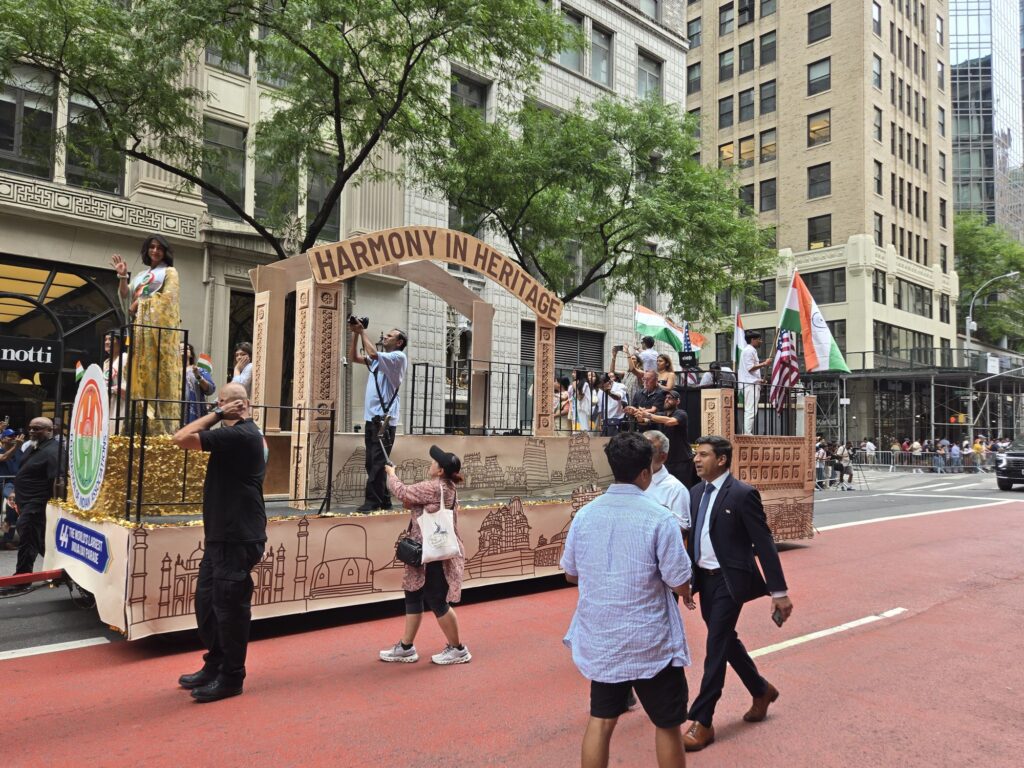
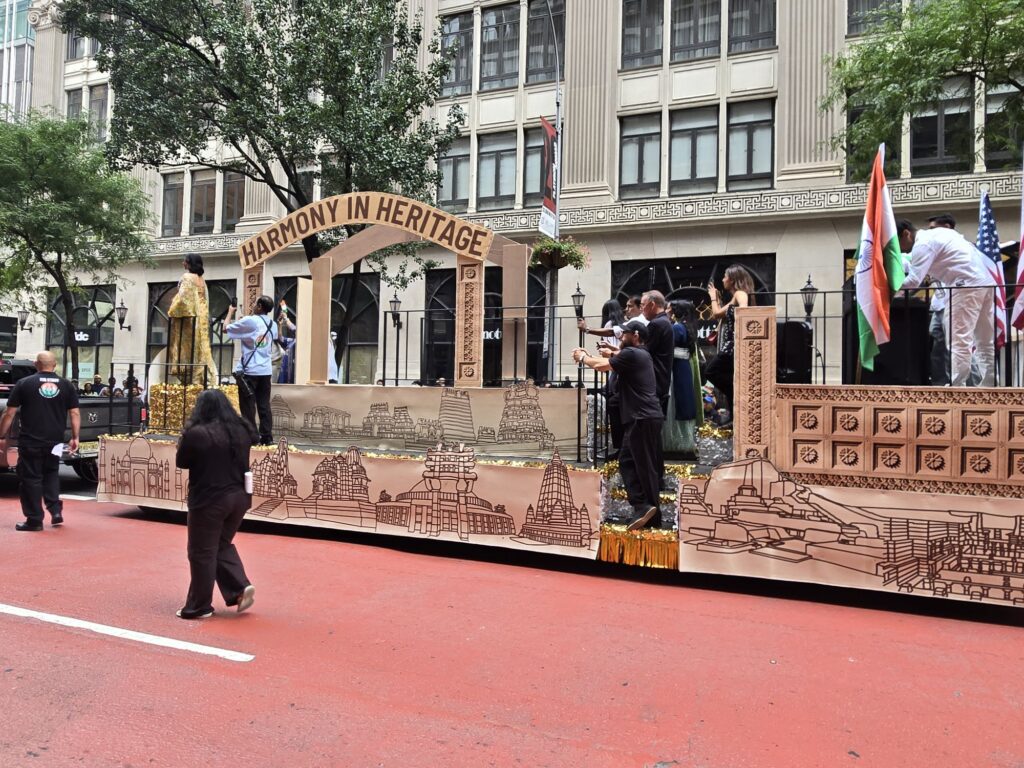
The theme of this year’s India Day Parade was “Harmony In Heritage”—and nowhere was that harmony more striking than among the many religious and spiritual traditions making their way down Madison Avenue.
Back in India, relations between religious communities are not always so harmonious. Religious disputes, communal tensions and arguments over temples, mosques, conversions and identity regularly make headlines—and regular readers of Hindu Herald will be familiar with many of them.
But this parade wasn’t taking place in India. It was taking place in America.
On the streets of New York, Hindus, Jains, Muslims, Christians, Sikhs and members of other spiritual traditions celebrated their Indian heritage side by side. Brahma Kumaris shared the parade route with Jains; Hare Krishna devotees with Muslims; Hindu temples with Christian organizations; and groups ranging from the Isha Foundation to Falun Dafa and the multi-faith Sachkhand Nanak Dham.
So rather than simply talk about “Harmony in Heritage,” we decided to show it.
Here are some of the religious & spiritual faces of the 2026 NYC India Day Parade.
🕉️ Familiar Faces Of Indian Spirituality
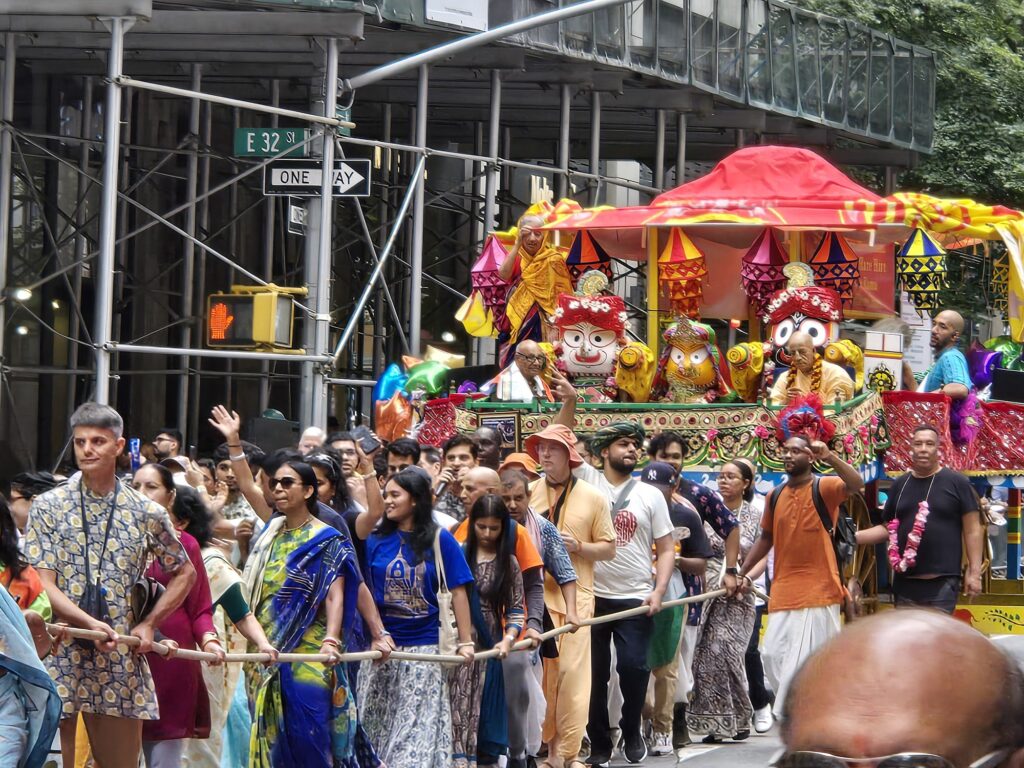
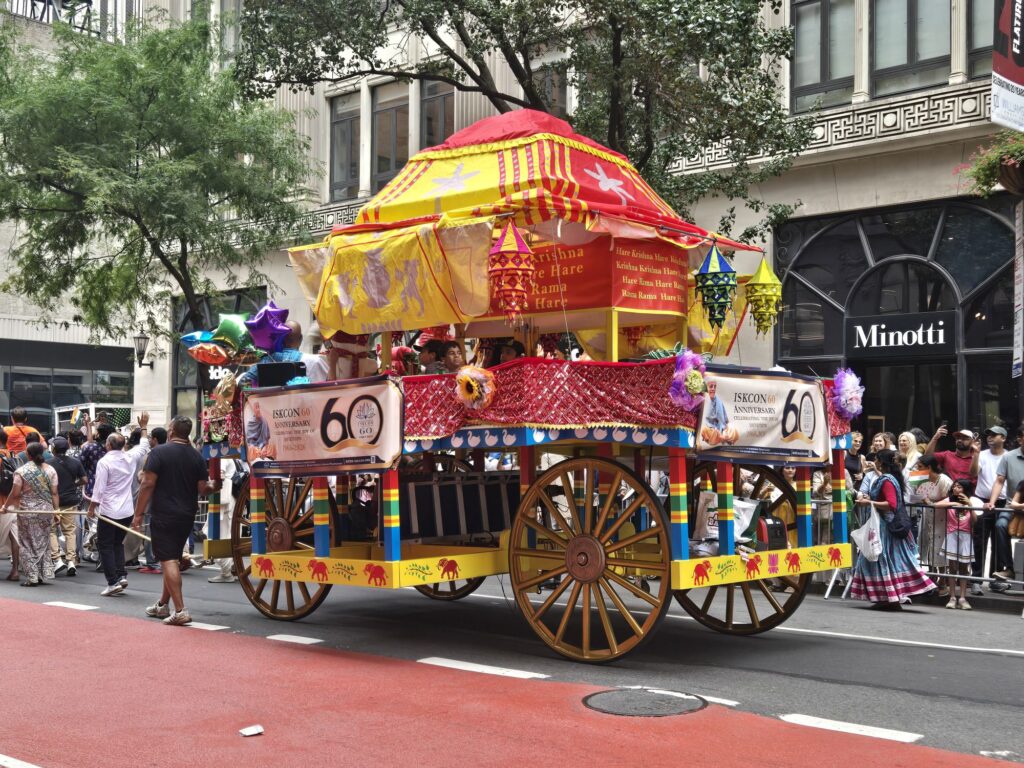
It was hard to miss the Hare Krishnas. Members of the International Society for Krishna Consciousness (ISKCON) brought the color and devotional spirit of the famous Rath Yatra tradition to Madison Avenue…
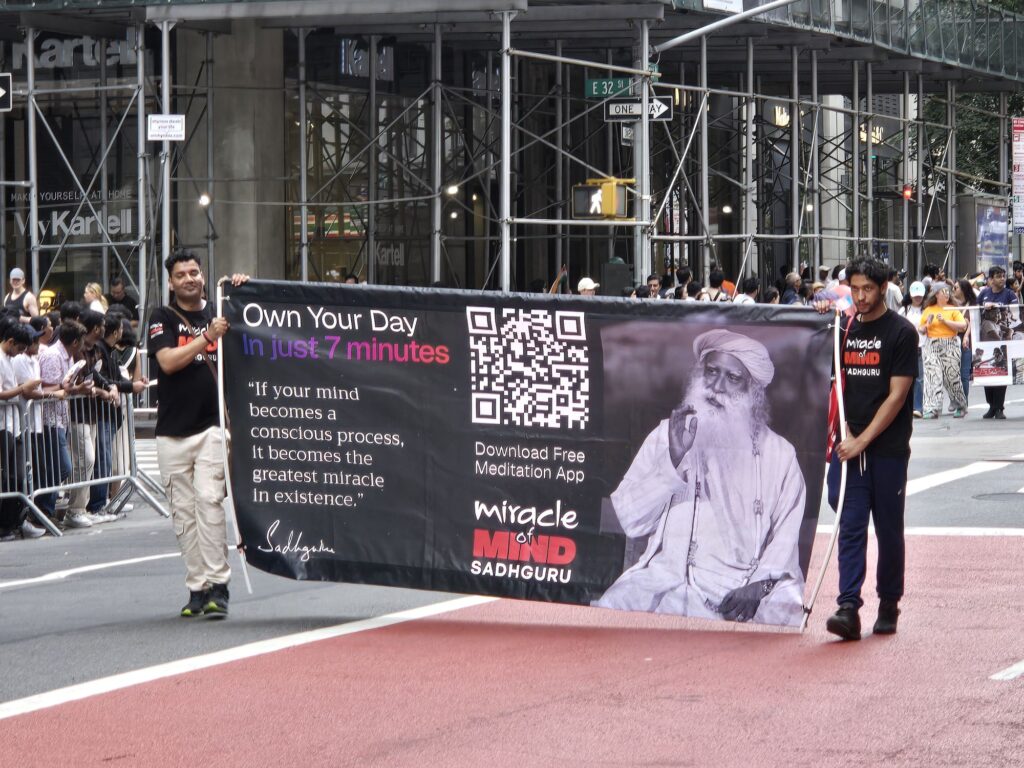
Sadhguru, the charismatic yogi and founder of the Isha Foundation, has become one of India’s most internationally recognizable spiritual teachers, attracting a global following with his teachings on yoga, meditation and inner well-being. His followers brought that message to the parade with a giant banner promoting his “Miracle Of Mind” meditation initiative and its promise of taking just seven minutes a day.
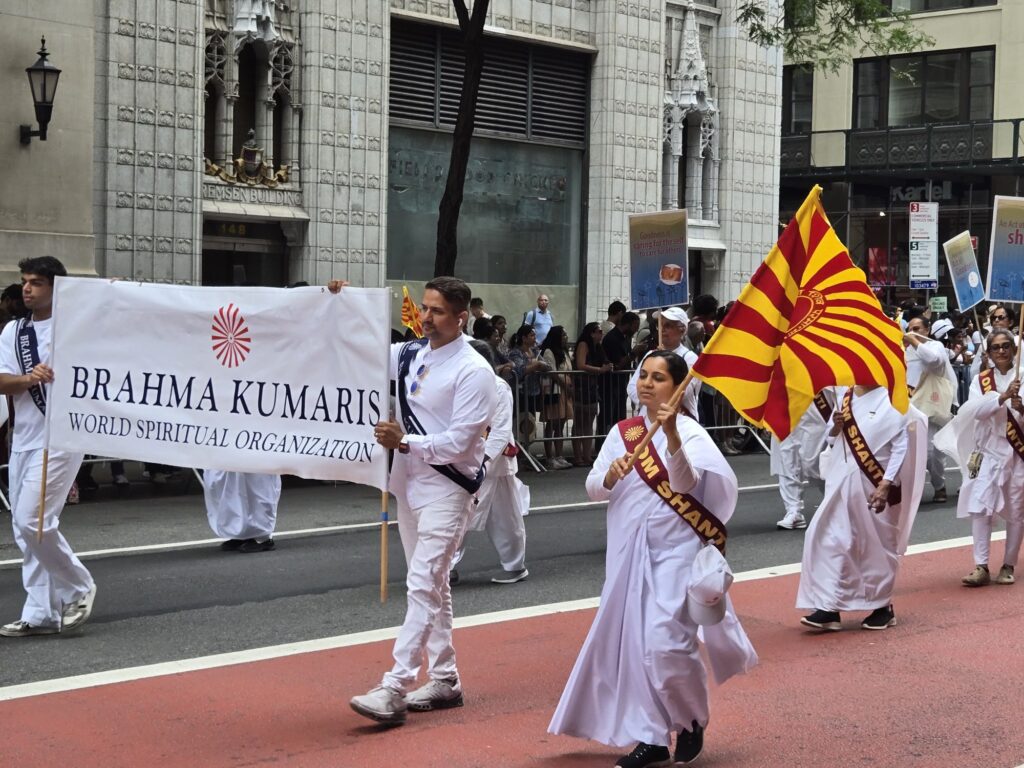
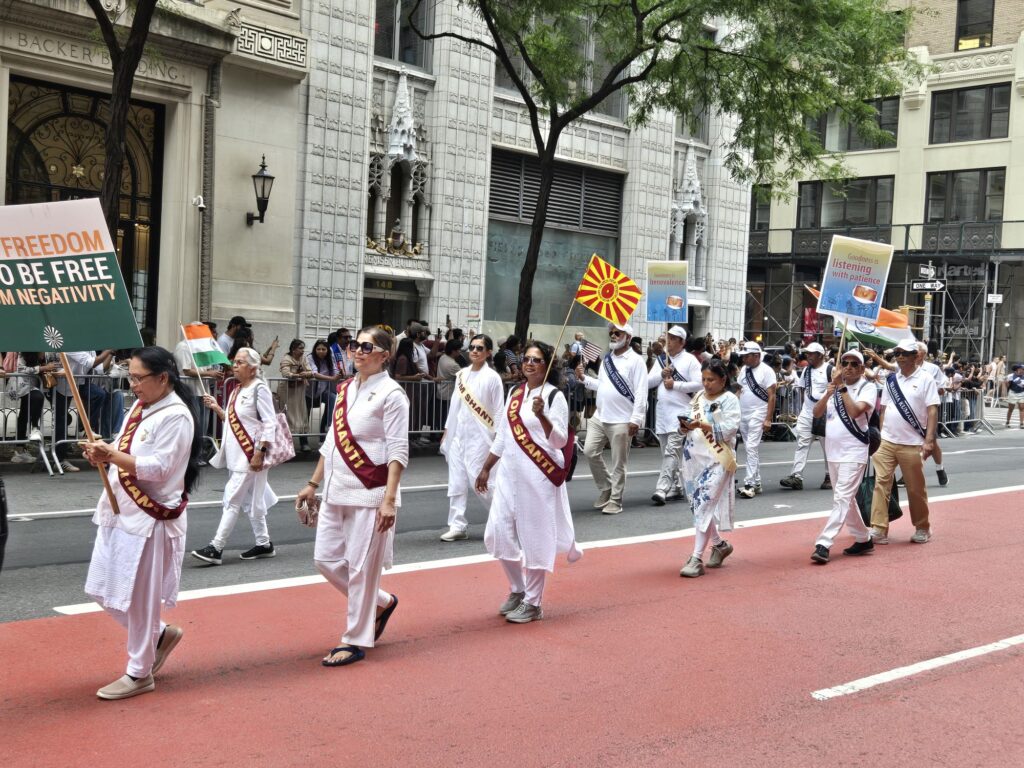
The Brahma Kumaris were instantly recognizable in their predominantly white clothing, carrying signs with messages about peace, benevolence and freedom from negativity. Founded in India in the 1930s, the movement is particularly notable for the central role women have played in its leadership from its earliest days—an unusual feature among major spiritual movements of its era. Today, the Brahma Kumaris have centers around the world and are best known for Raja Yoga meditation, teachings centered on the soul and God, and an emphasis on inner transformation, peace and spiritual self-mastery.
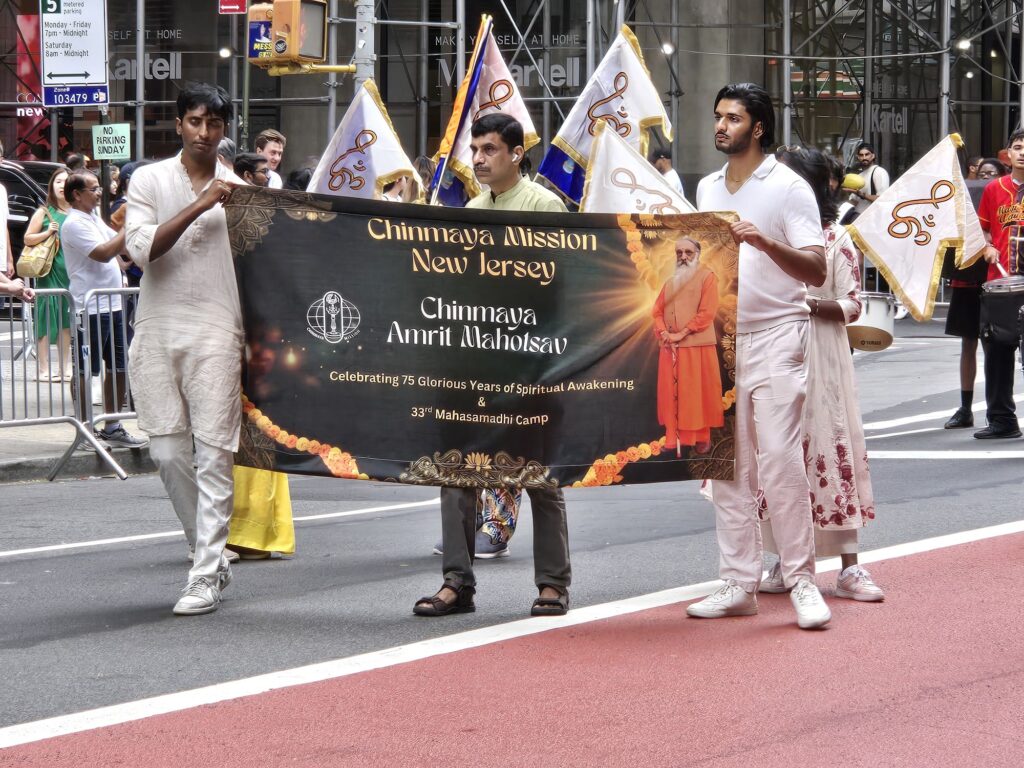
The Chinmaya Mission has spent decades bringing the teachings of Hindu philosophy—particularly Advaita Vedanta and the Bhagavad Gita — to audiences in India and around the world. Founded by Swami Chinmayananda, the movement is also well known for teaching Hindu traditions to younger generations through its Bala Vihar programs, making it an important part of Hindu life for many Indian-American families. The New Jersey contingent came to this year’s parade with an additional reason to celebrate: its banner marked 75 years of spiritual awakening as part of the Chinmaya Amrit Mahotsav.
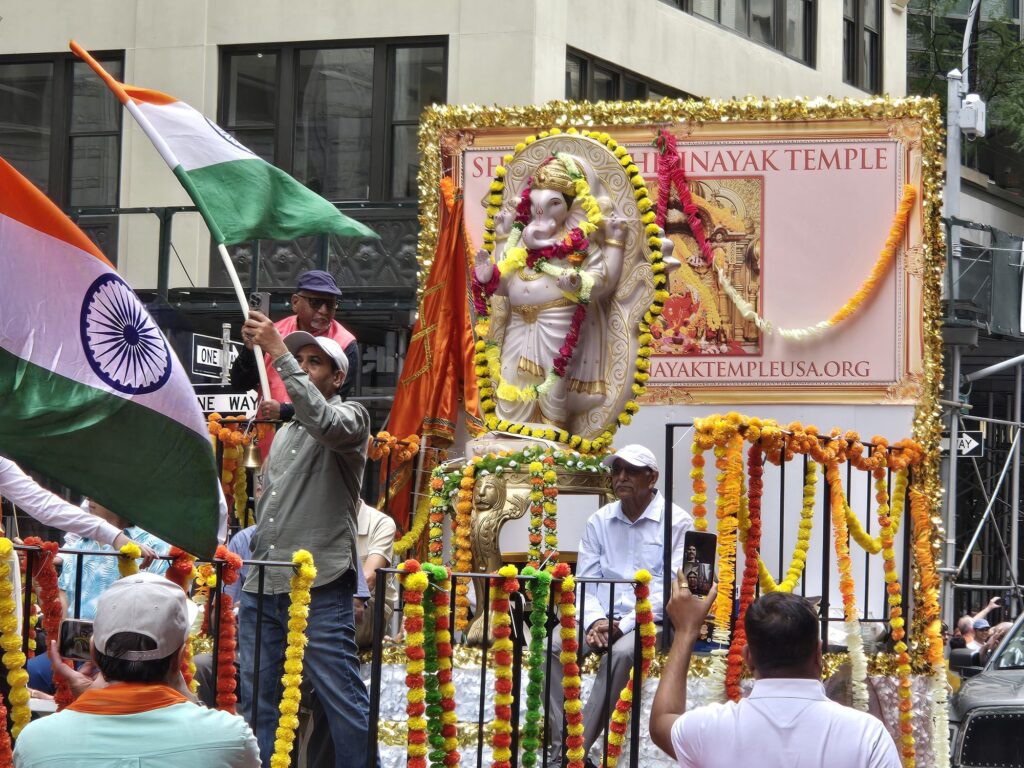
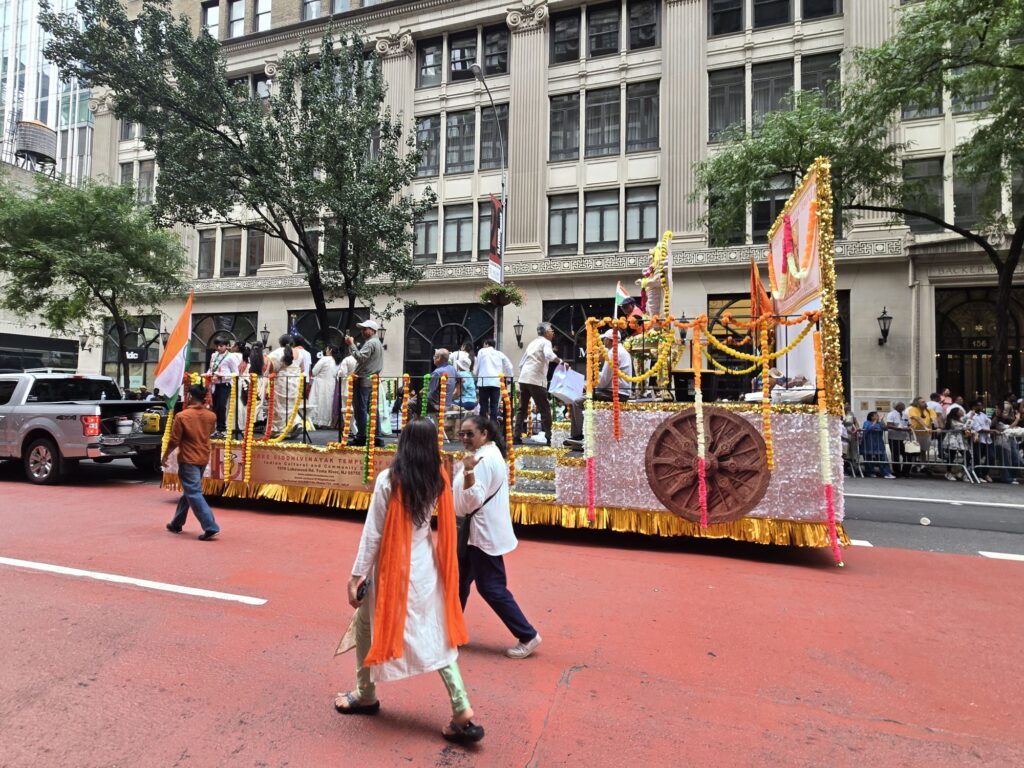
Devotees from Shree Siddhivinayak Temple USA in Toms River, New Jersey, joined the parade with an elaborate float centered on a large murti of Lord Ganesha. Adorned with flower garlands and accompanied by Indian flags, the display brought one of Hinduism’s most beloved deities—revered as the remover of obstacles and the lord of new beginnings—into the heart of Manhattan.
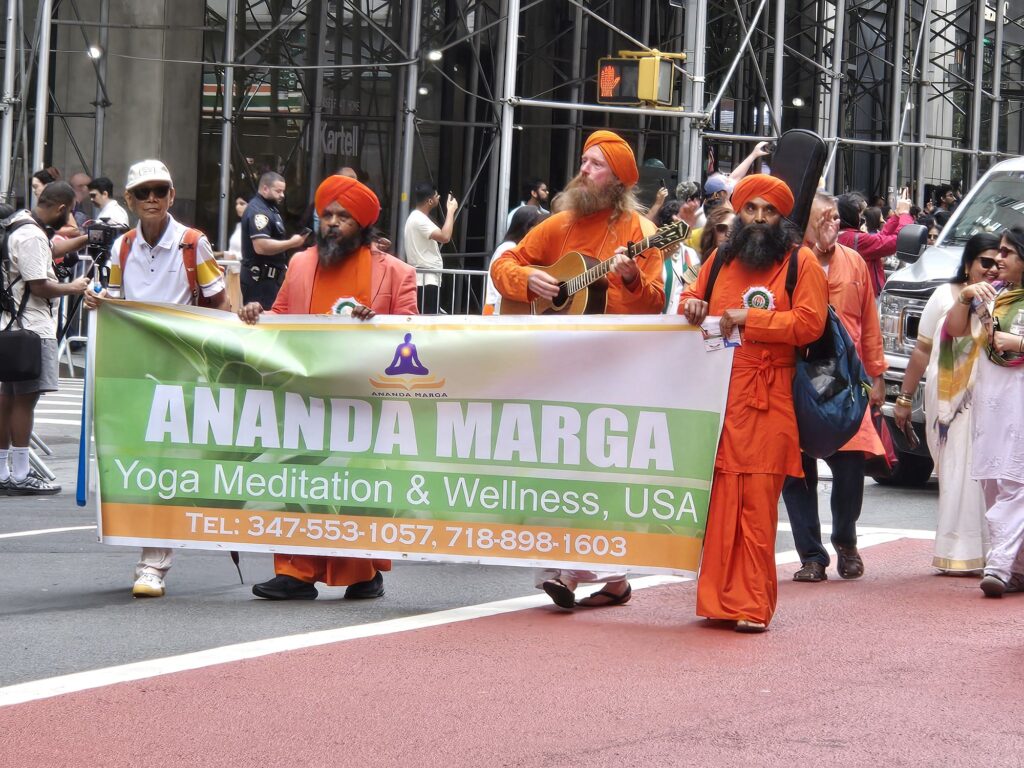
Ananda Marga joined the parade with members dressed in their distinctive orange robes, carrying a banner promoting yoga, meditation and wellness. Founded in India in 1955, Ananda Marga is a spiritual and social movement whose practices center on meditation, yoga and service to humanity.
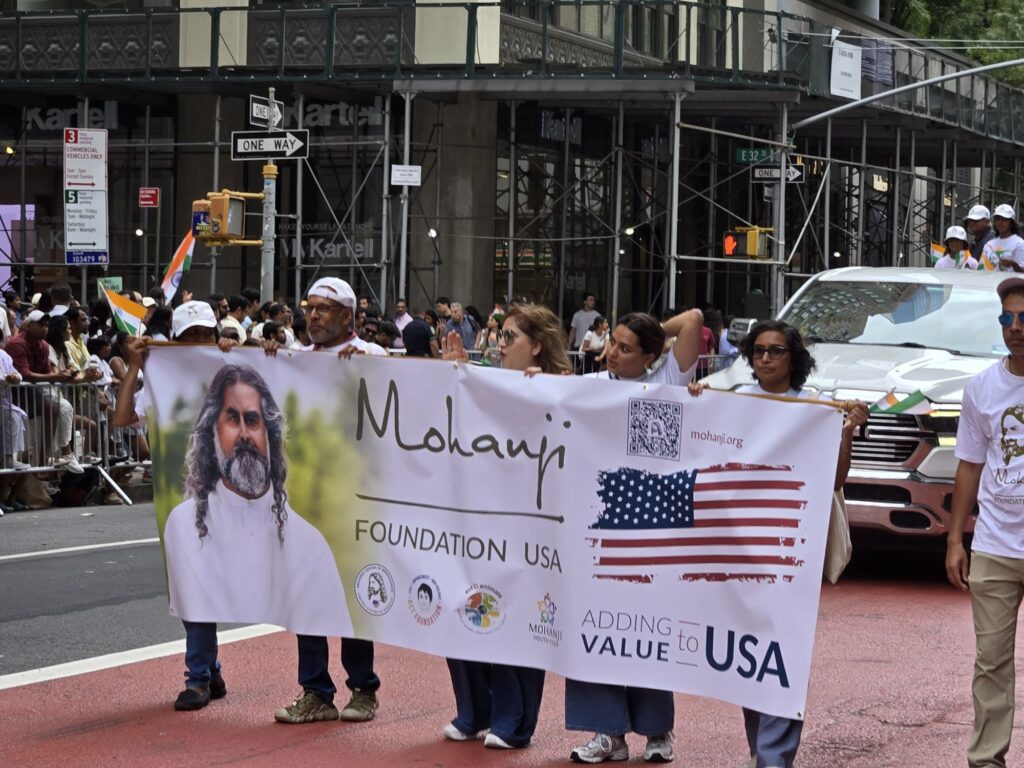
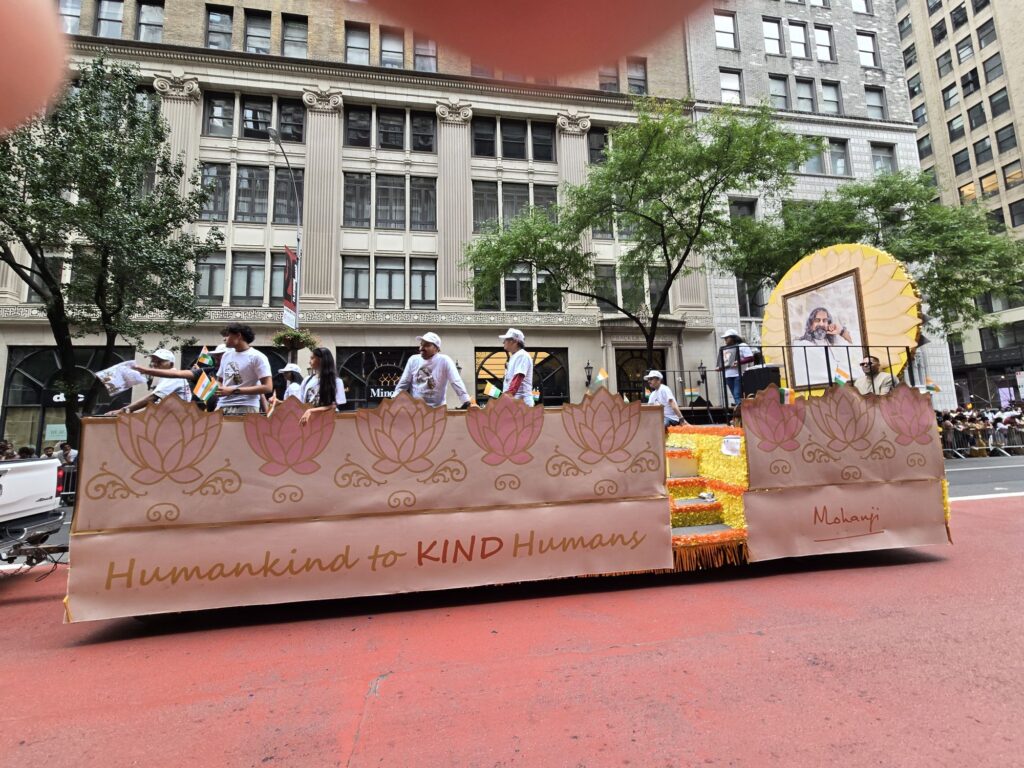
The Mohanji Foundation, founded by spiritual teacher Mohanji, joined the parade with a large contingent and an elaborate lotus-themed float. The international spiritual organization emphasizes meditation, selfless service, compassion and nonviolence, summed up by the message displayed prominently along the float: “Humankind to KIND Humans”
🕊️ A Parade Of Faiths
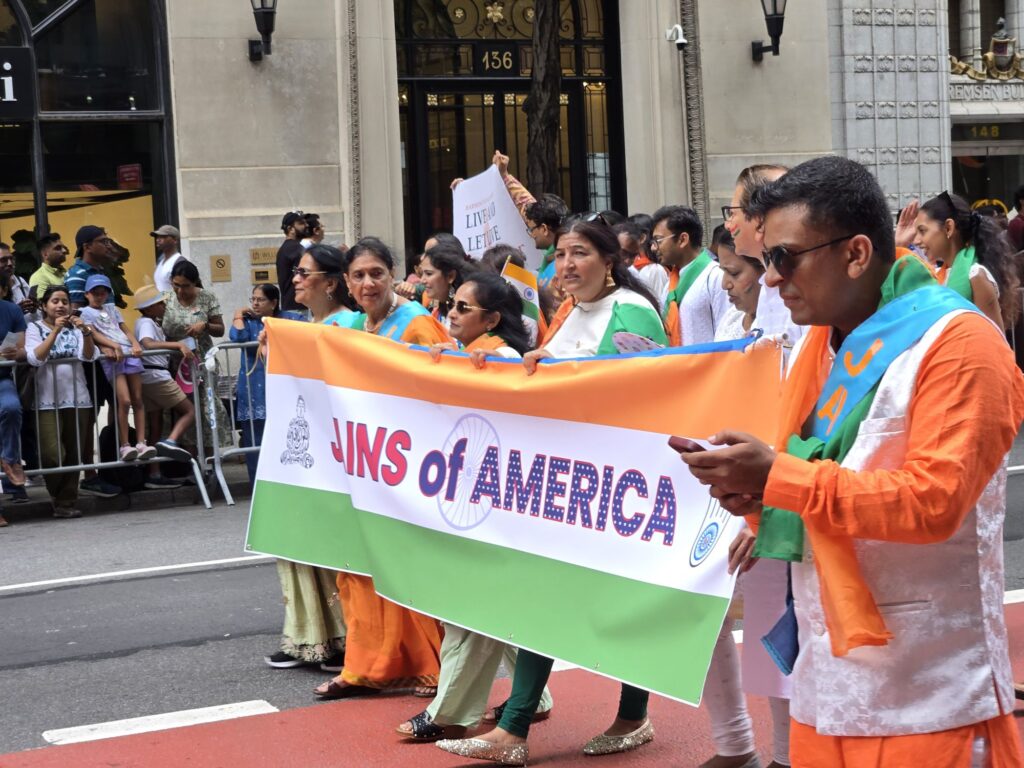
Representatives of Jains Of America joined the India Day Parade, adding one of India’s oldest religious traditions to the day’s striking mix of faiths. Jainism places ahimsa, or nonviolence, at the heart of religious life, along with compassion, self-discipline and respect for all living beings.
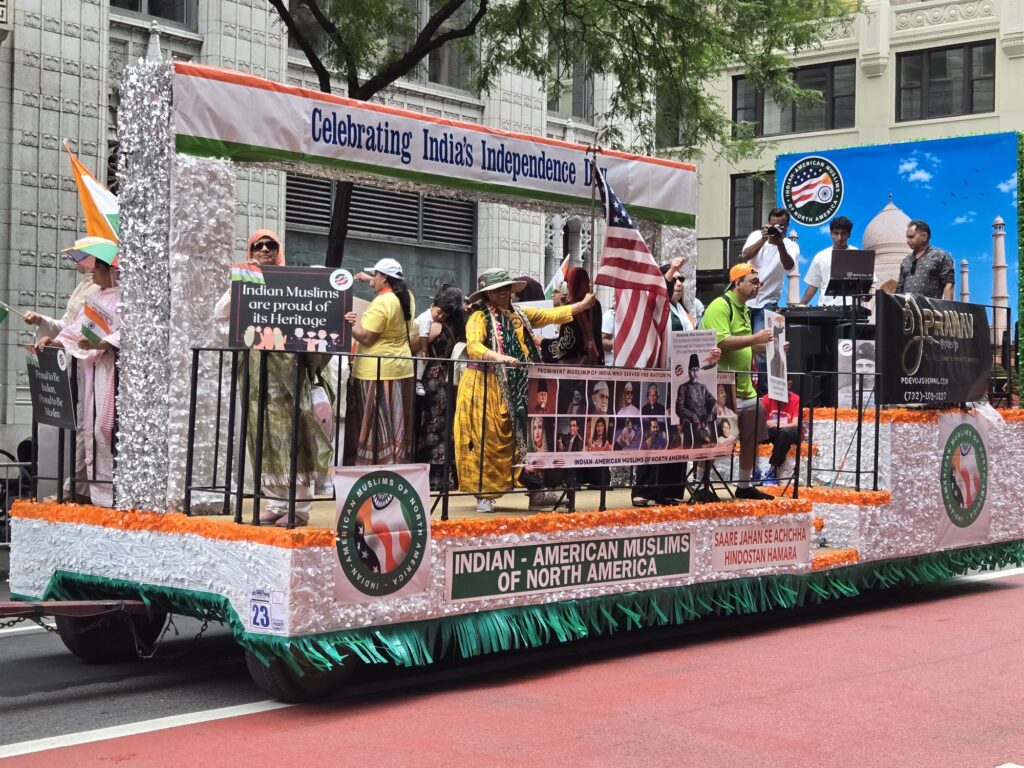
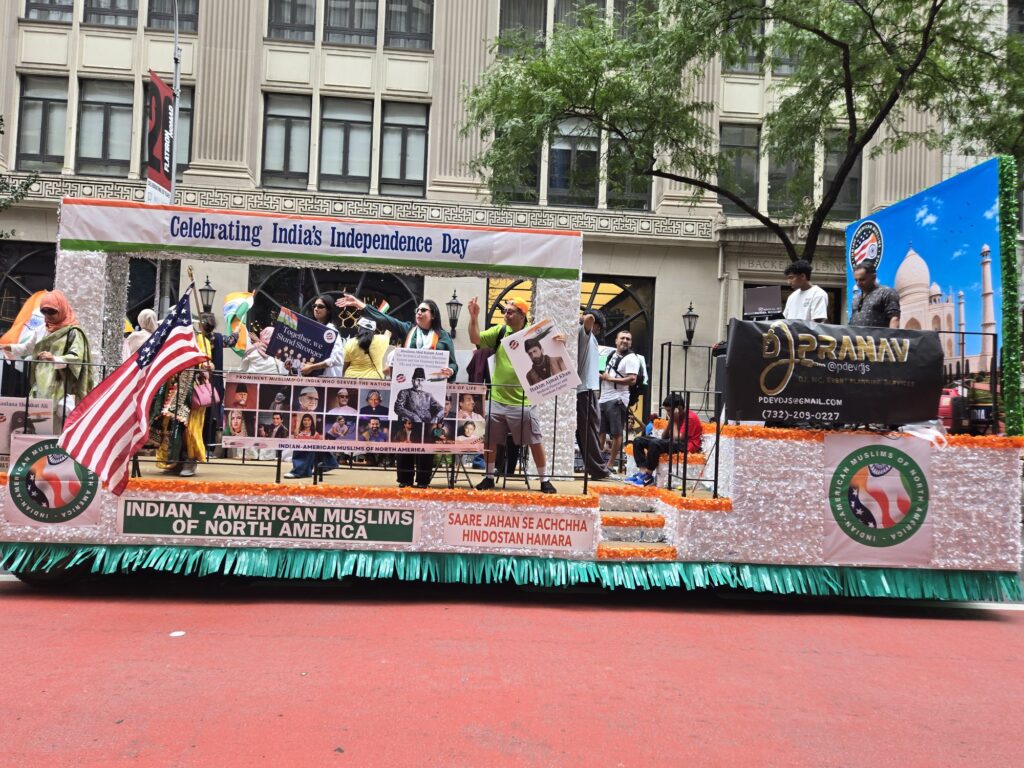
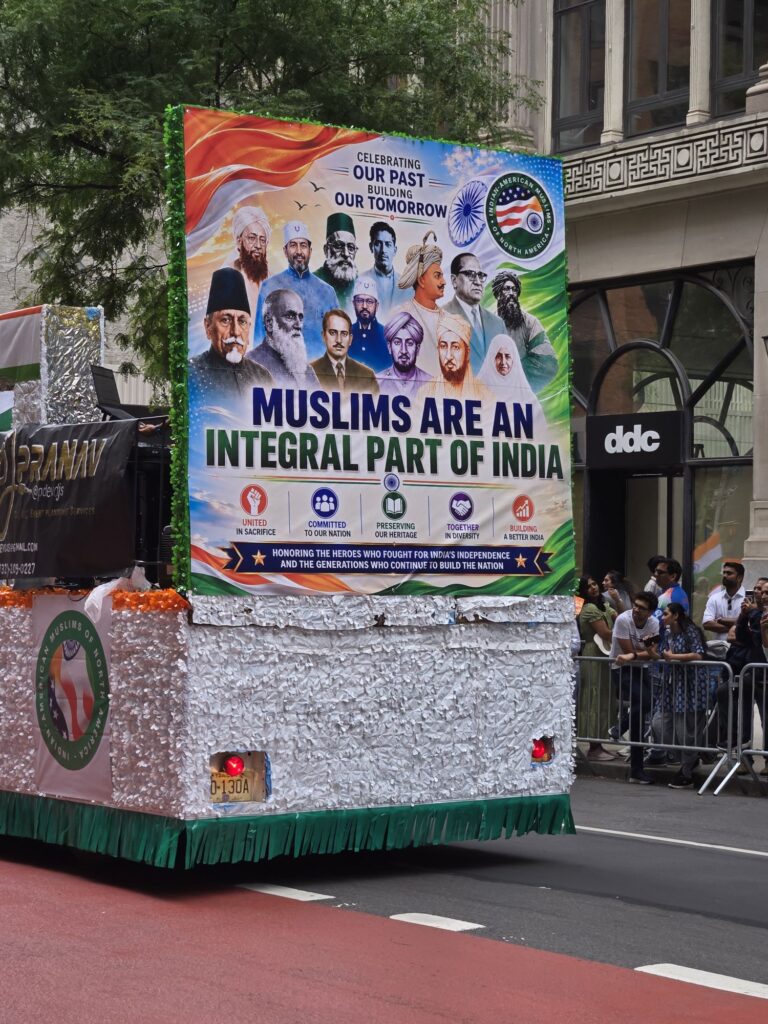
Indian American Muslims of North America brought a distinctly Muslim presence to the parade, celebrating the community’s place in India’s history and heritage. Their float featured the Taj Mahal alongside portraits of prominent Indian Muslims, with participants carrying signs honoring Muslim figures who contributed to the country. The message was unmistakable, summed up by the large display at the rear of the float: “Muslims are an integral part of India.”
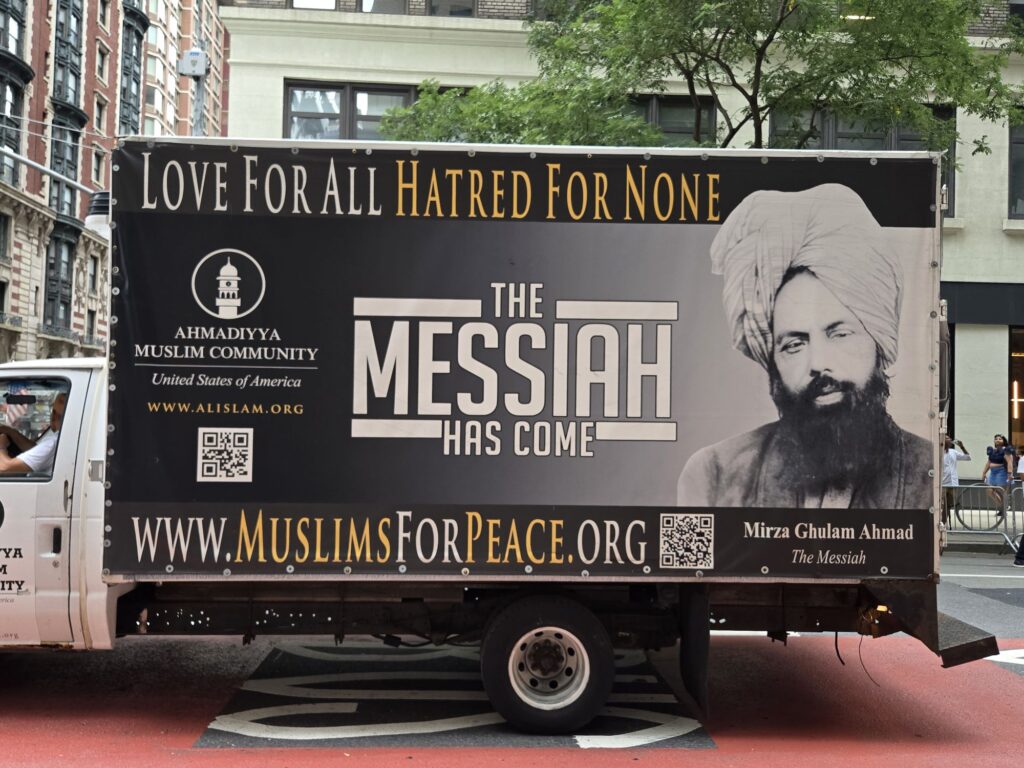
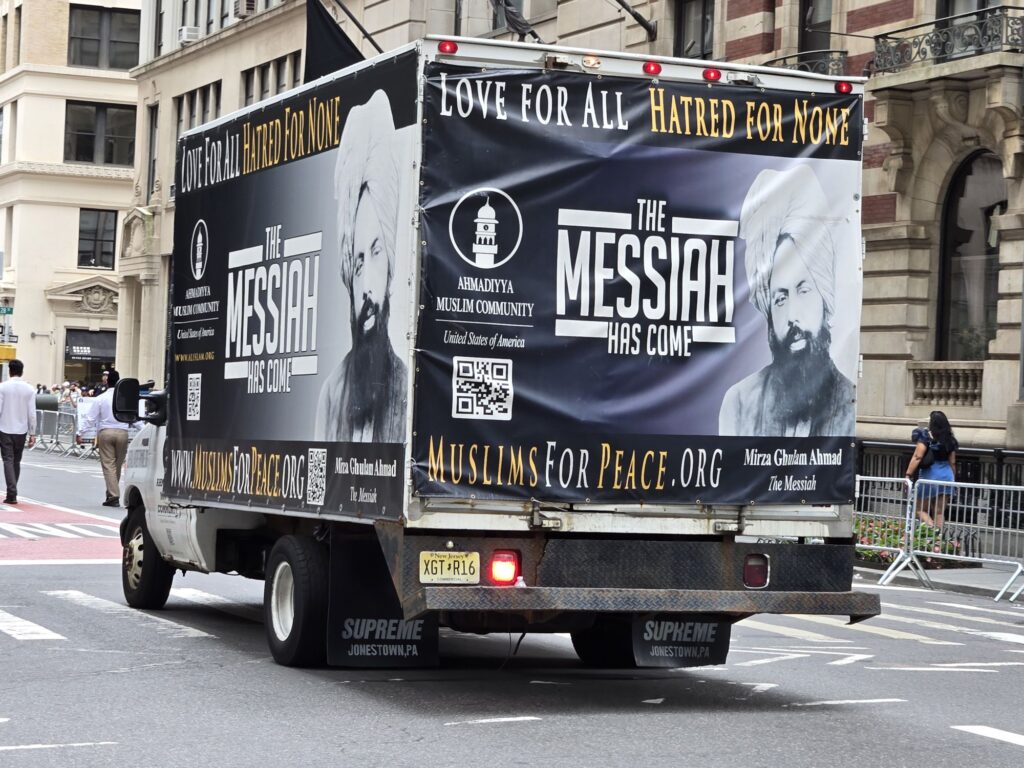
The Ahmadiyya Muslim Community joined the parade with its familiar motto, “Love for All, Hatred for None,” and a display declaring, “The Messiah Has Come.” Ahmadis follow Mirza Ghulam Ahmad, the movement’s 19th-century founder, whom they regard as the promised Messiah and Mahdi. The movement also teaches that God sent spiritual teachers to peoples throughout history, and recognizes figures including Rama, Krishna, Buddha, Guru Nanak, Zoroaster and Confucius as divinely inspired messengers or reformers.
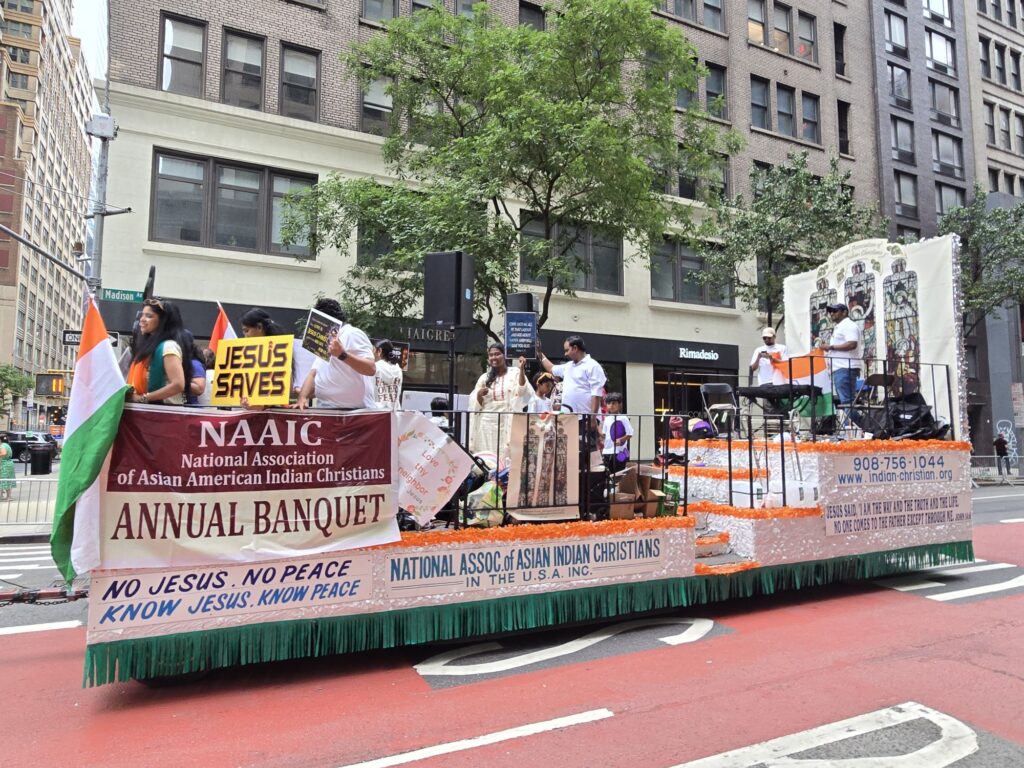
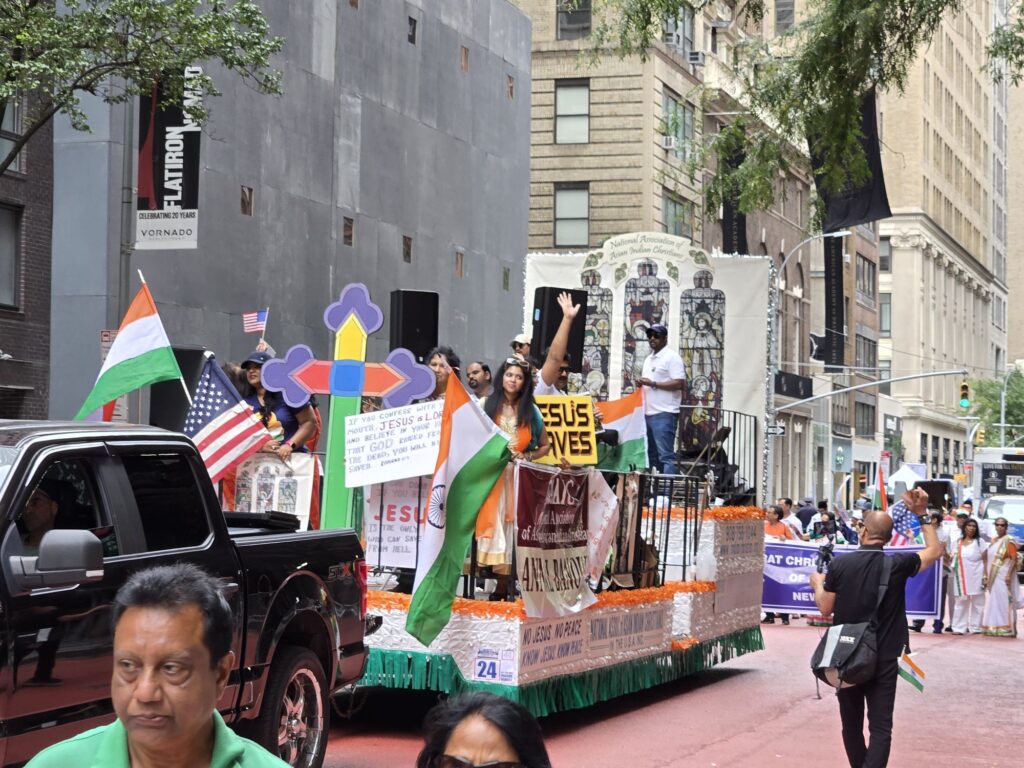
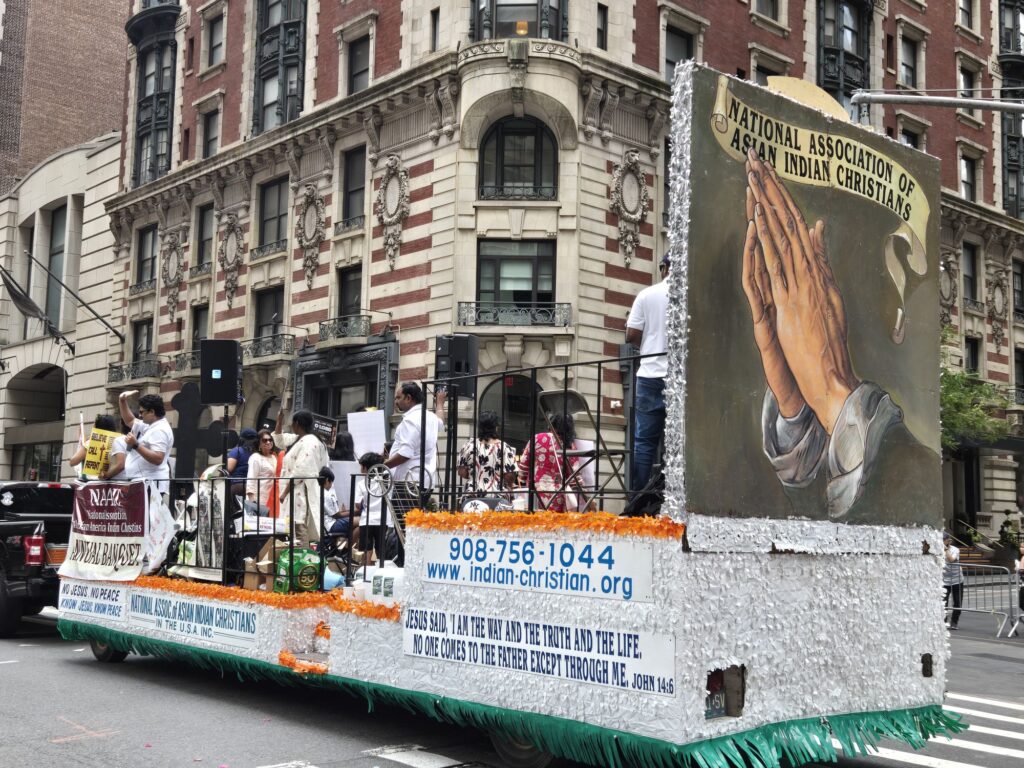
There was no mistaking the National Association Of Asian American Indian Christians NAAIC’s message. As the float made its way down Madison Avenue, participants preached over the loudspeaker about Jesus’ death on the cross, called on listeners to repent, and declared that India needed Jesus. At one point, a woman’s voice shifted into a rhythmic, almost sing-song refrain: “pray for India, pray for India.” Signs on the float reinforced the message with phrases including “Jesus Saves” and “No Jesus, No Peace — Know Jesus, Know Peace.” Against a parade showcasing India’s many religious traditions, it was one of the day’s most overtly evangelical displays.
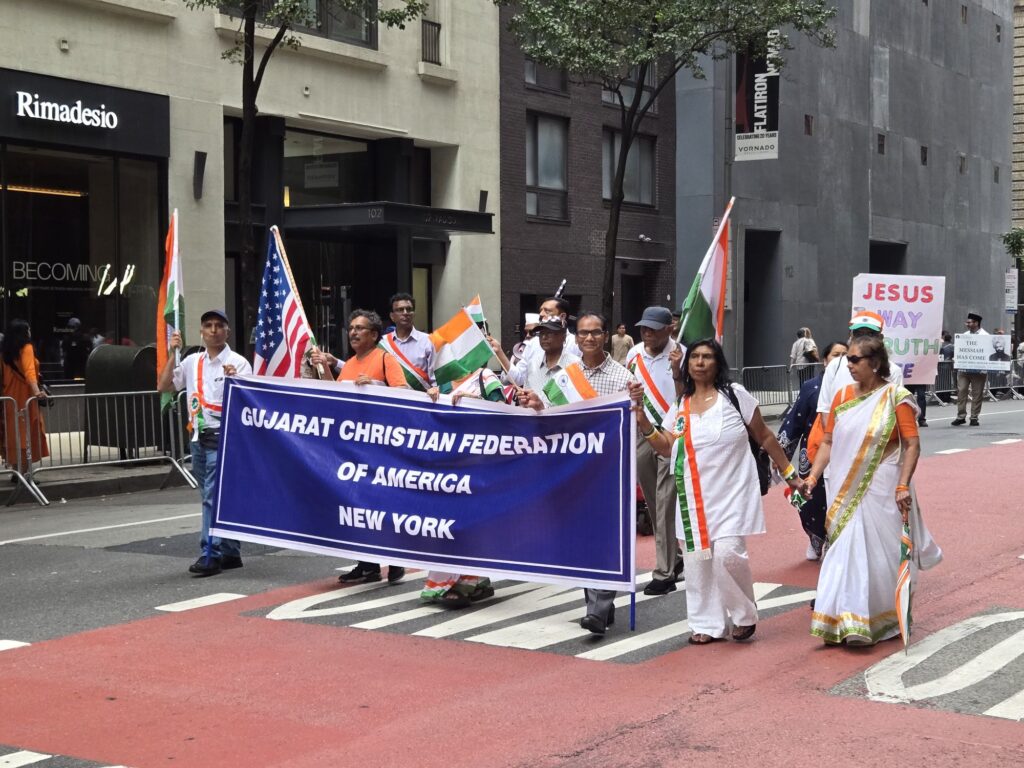
The Gujarat Christian Federation Of America represented the Christian community with roots in the western Indian state of Gujarat. Marchers carried Indian and American flags, many dressed in the colors of the Indian tricolor, reflecting both their Gujarati heritage and their American home.
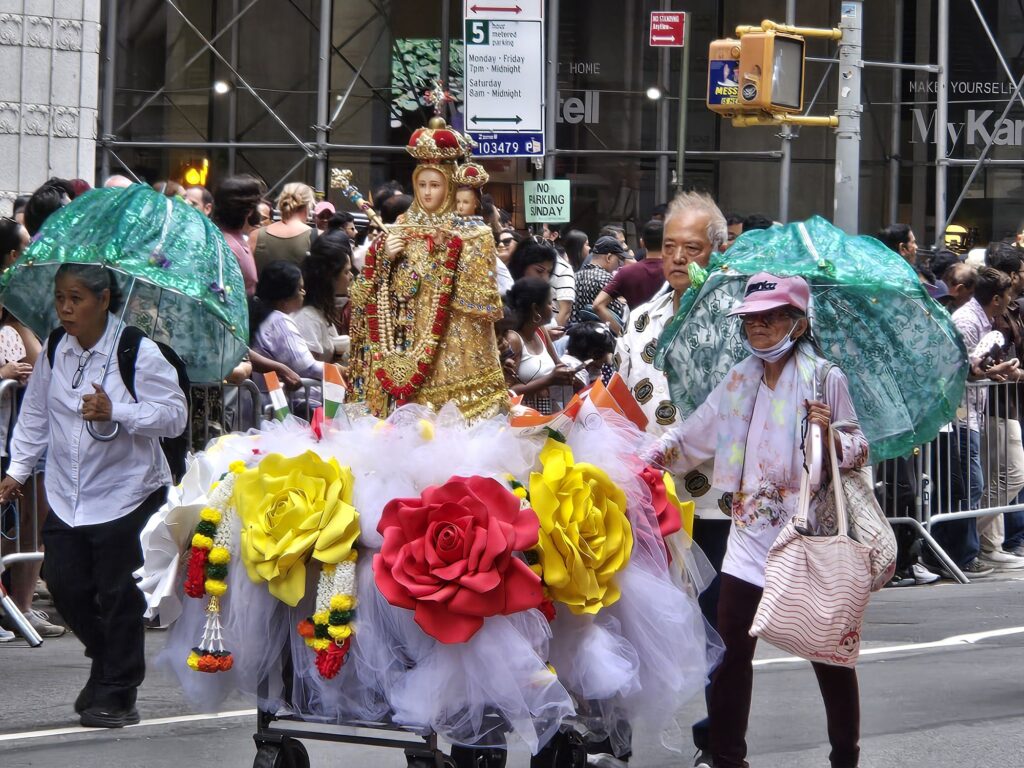
One of the more ornate Christian displays featured a richly decorated image of the Virgin Mary holding the infant Jesus. Crowned and dressed in shimmering gold, the figures were surrounded by garlands, enormous colorful roses and Indian flags as the small devotional cart made its way through the parade.
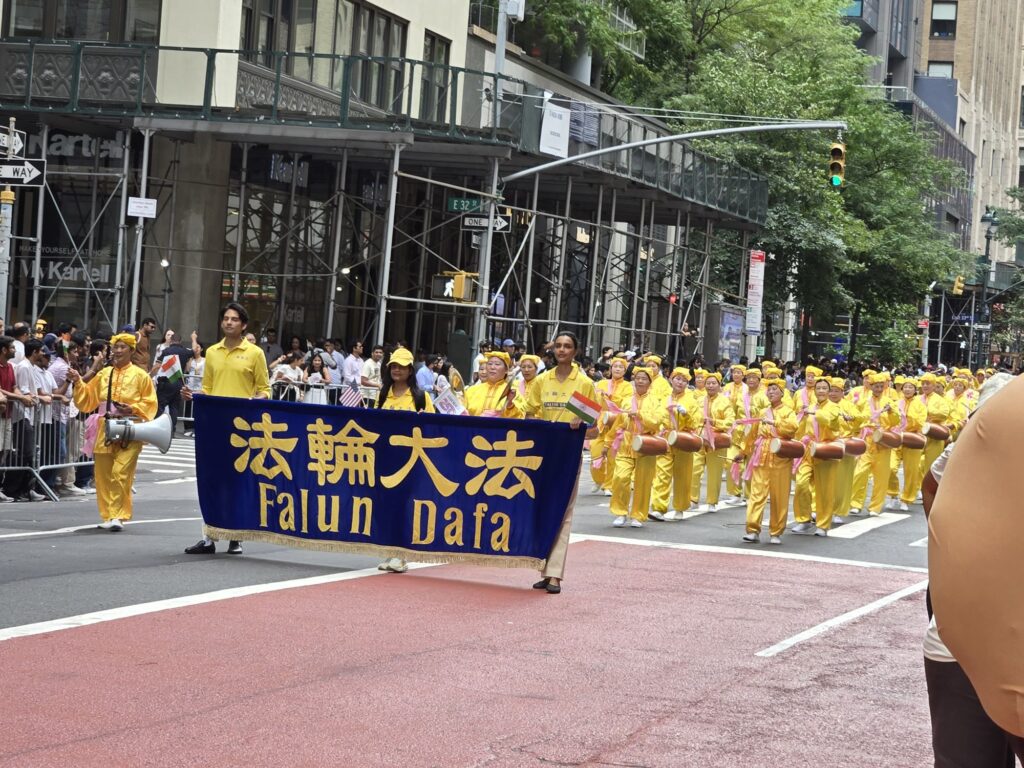
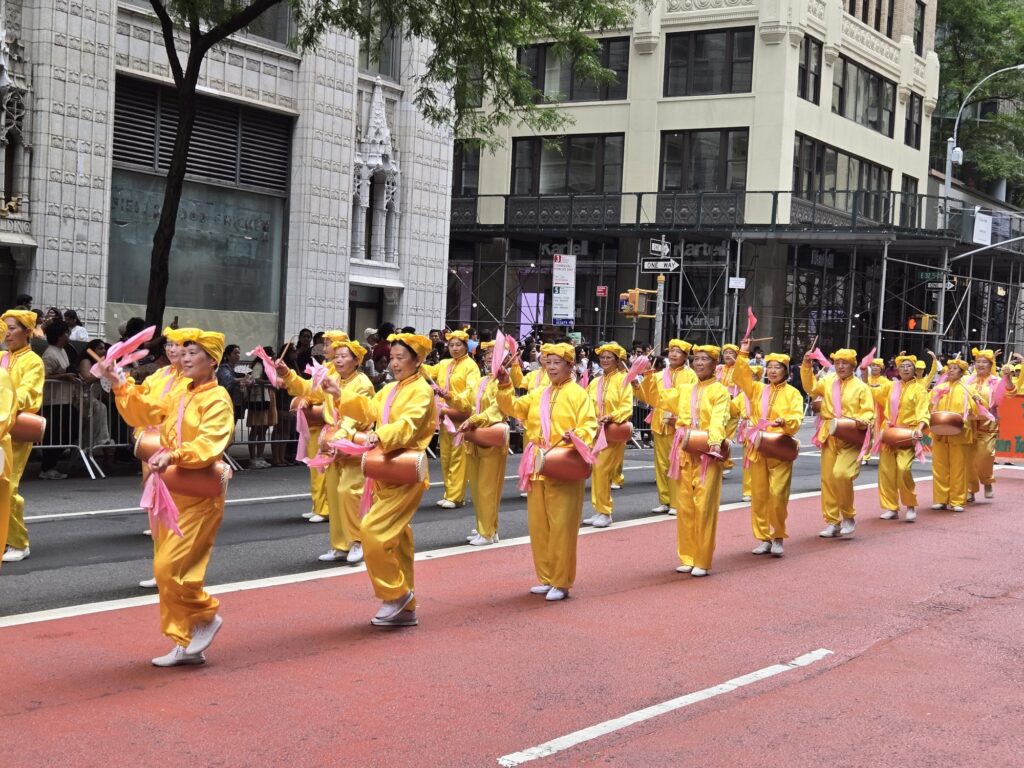
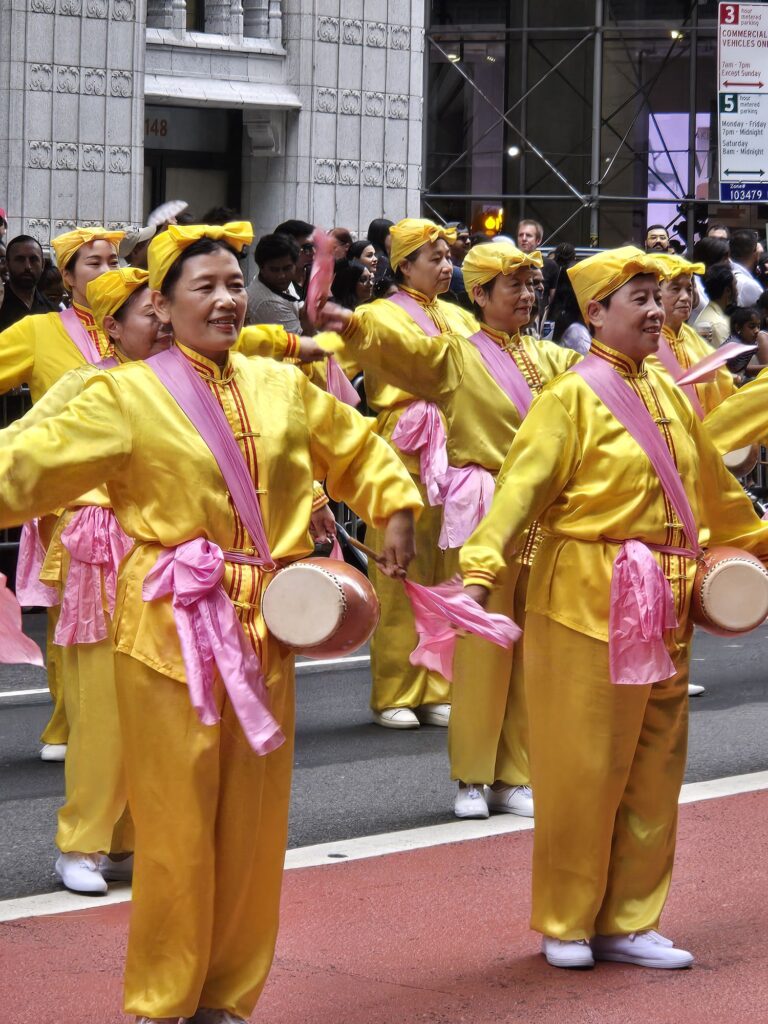
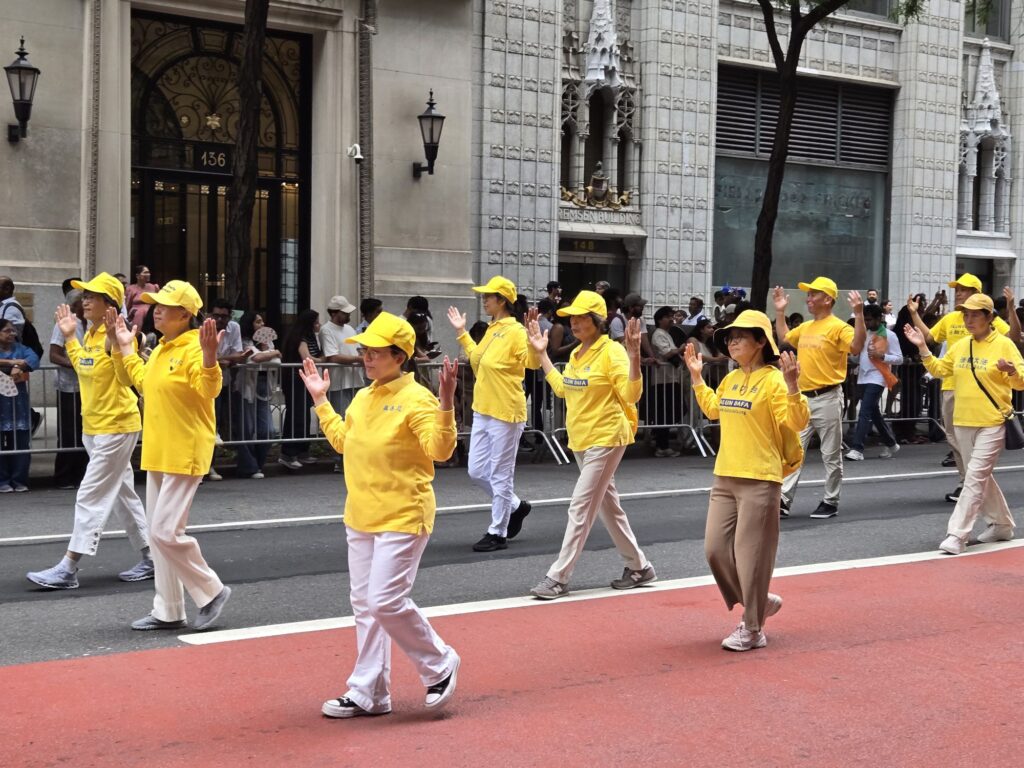
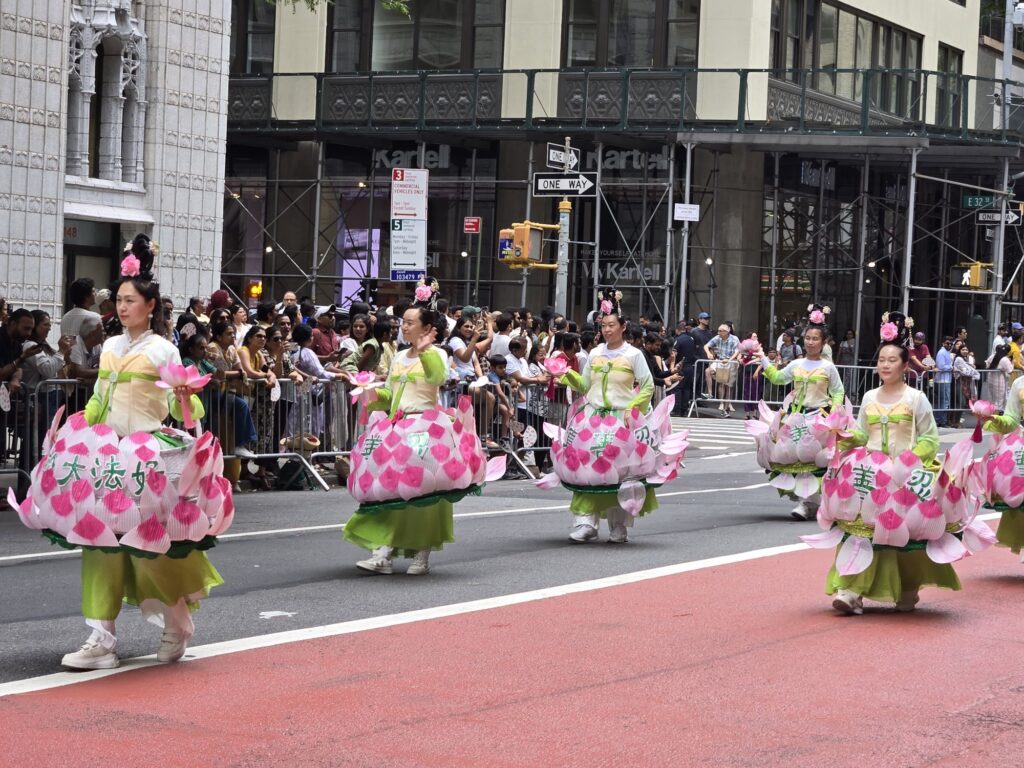
Falun Dafa, also known as Falun Gong, is a spiritual practice that emerged in China in the early 1990s, combining meditation and qigong exercises with teachings centered on truthfulness, compassion and forbearance. The movement has been severely persecuted by the Chinese government since 1999, with practitioners subjected to imprisonment and other abuses. Outside China, Falun Gong has developed a highly visible international presence. Organizations associated with Falun Gong practitioners also established Shen Yun Performing Arts, the touring classical Chinese dance company now familiar to audiences across the United States. At the India Day Parade, their large contingent was impossible to miss: brilliant yellow costumes, rows of drummers, coordinated exercises and dancers dressed as pink lotus blossoms filled Madison Avenue.
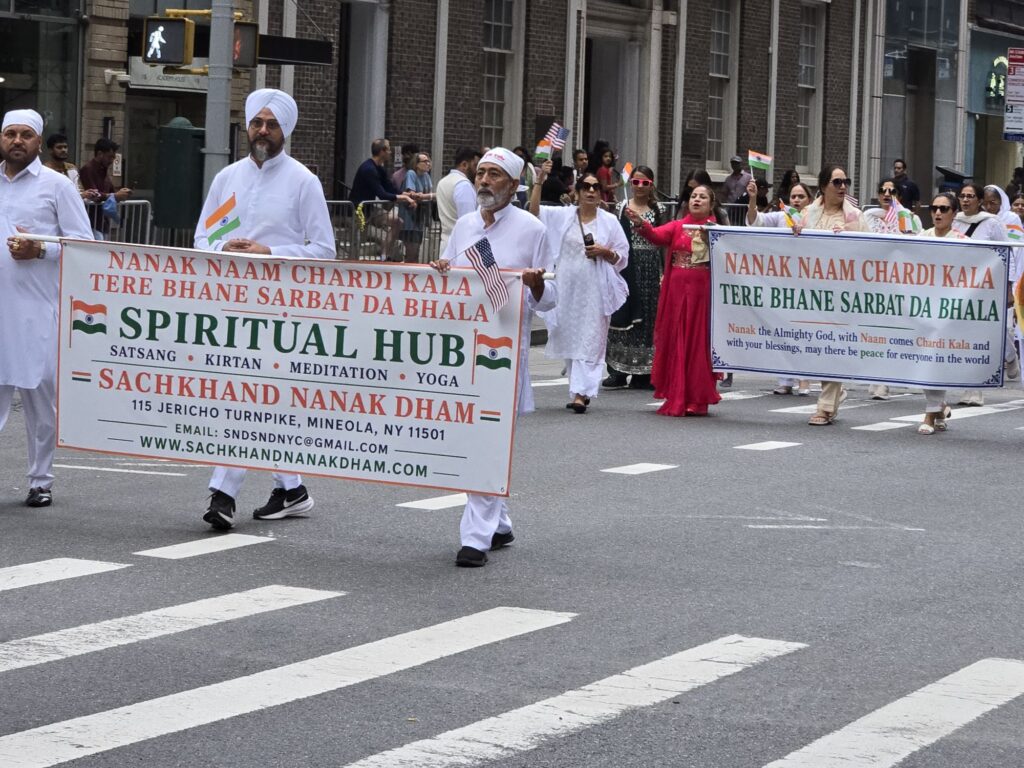
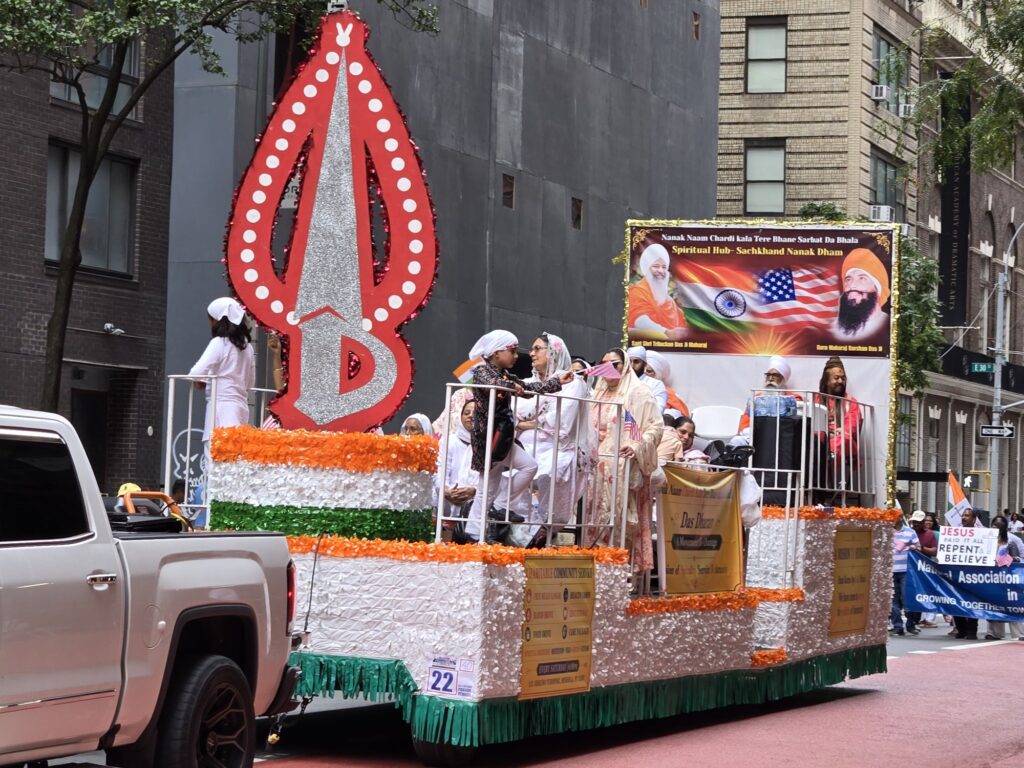
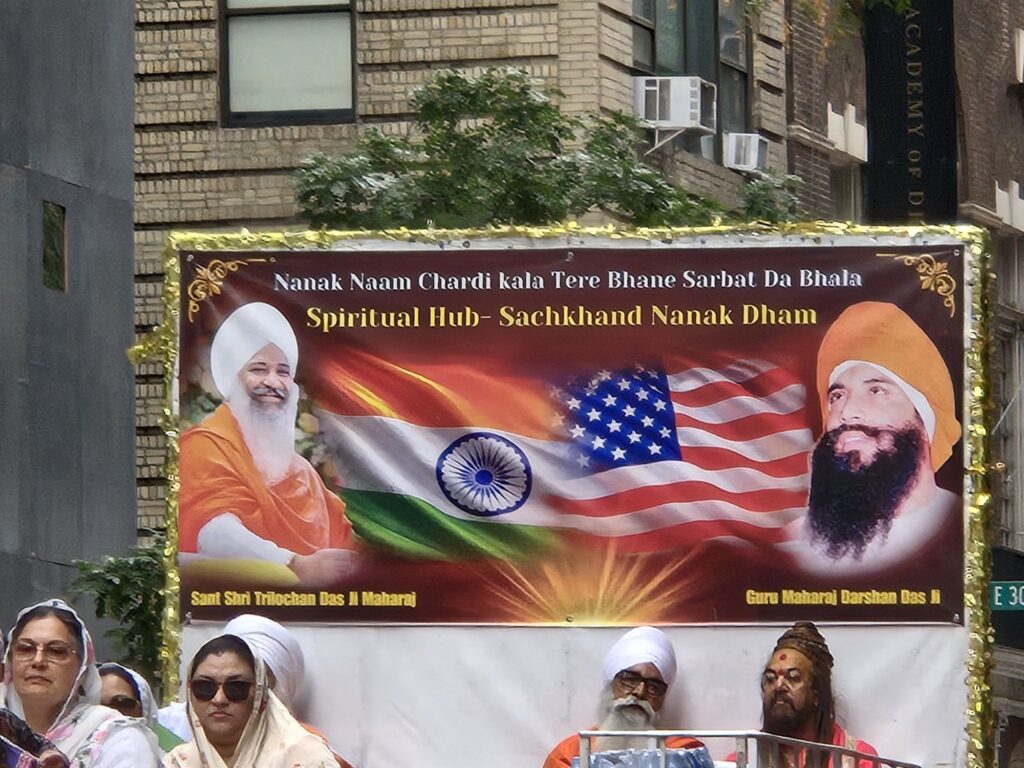
Sachkhand Nanak Dham describes itself as a spiritual hub centered on satsang, kirtan, meditation and yoga. Its procession drew visibly on Sikh traditions, carrying the message “Nanak Naam Chardi Kala, Tere Bhane Sarbat Da Bhala”—a prayer for the welfare of all. Yet as the group passed, participants were also chanting “Om Namah Shivaya,” the ancient Hindu mantra associated with Lord Shiva. That blending of Sikh and Hindu devotional traditions made Sachkhand Nanak Dham an especially interesting expression of India’s interfaith spiritual landscape.
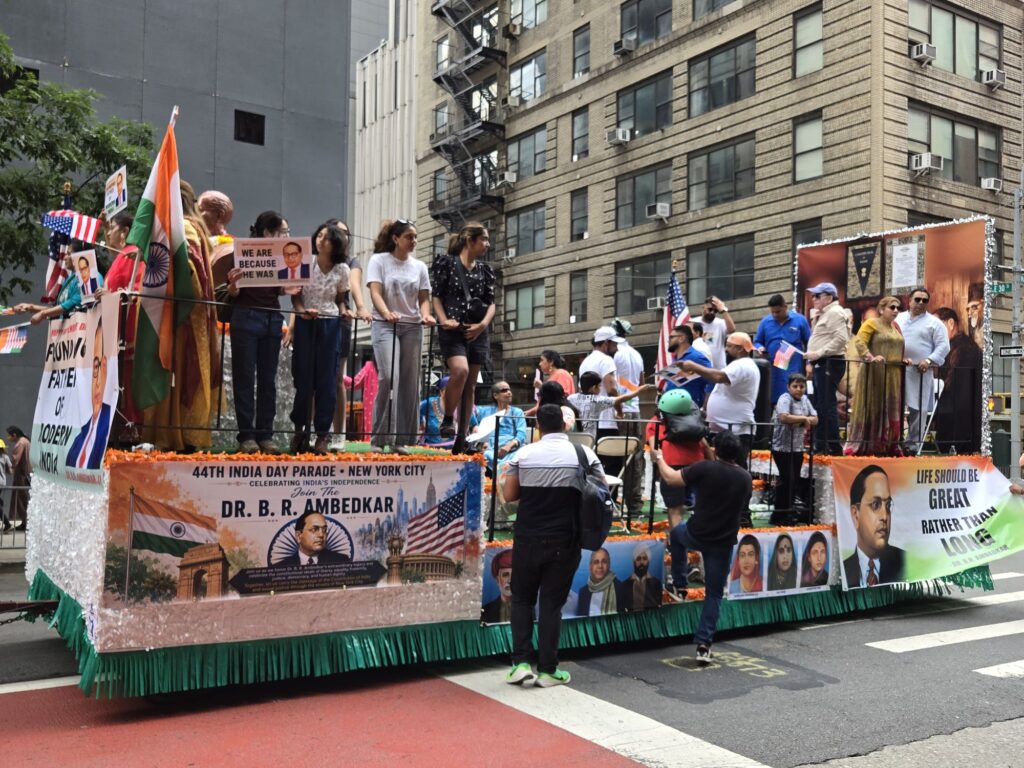
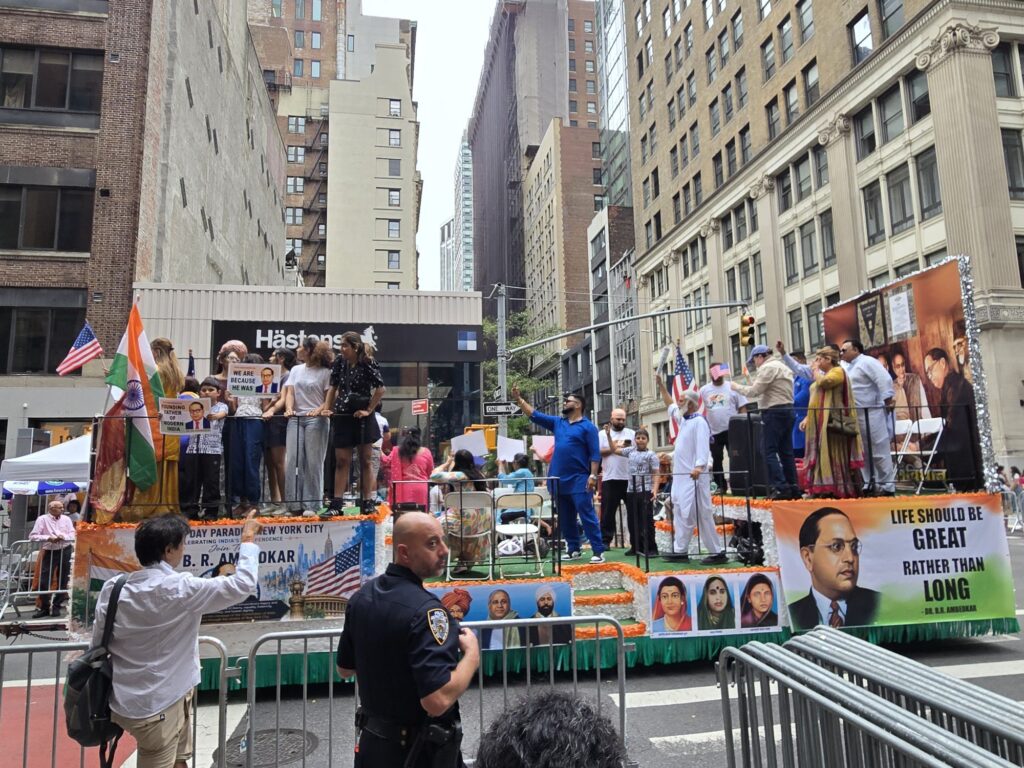
Dr. B. R. Ambedkar (1891–1956), one of the principal architects of India’s Constitution and a lifelong campaigner against caste discrimination, occupies a unique place in modern Indian religious history. Born into a Dalit community and subjected to untouchability, Ambedkar eventually rejected Hinduism and embraced Buddhism in 1956, together with hundreds of thousands of his followers. His interpretation, known as Navayana or the “New Vehicle,” reinterpreted Buddhism around social equality, human dignity and liberation from caste. The Ambedkar float celebrated both his contribution to independent India and the religious movement that continues to make him an enormously influential figure among Buddhist and Dalit communities.
🌐 Beyond The Religious Processions
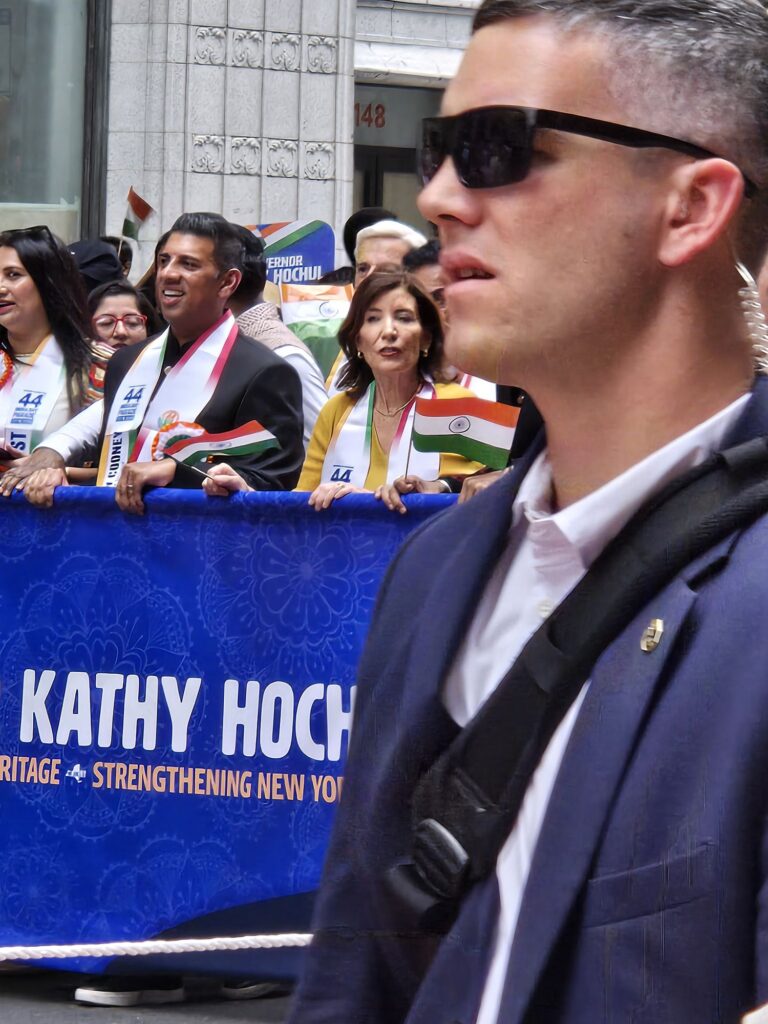
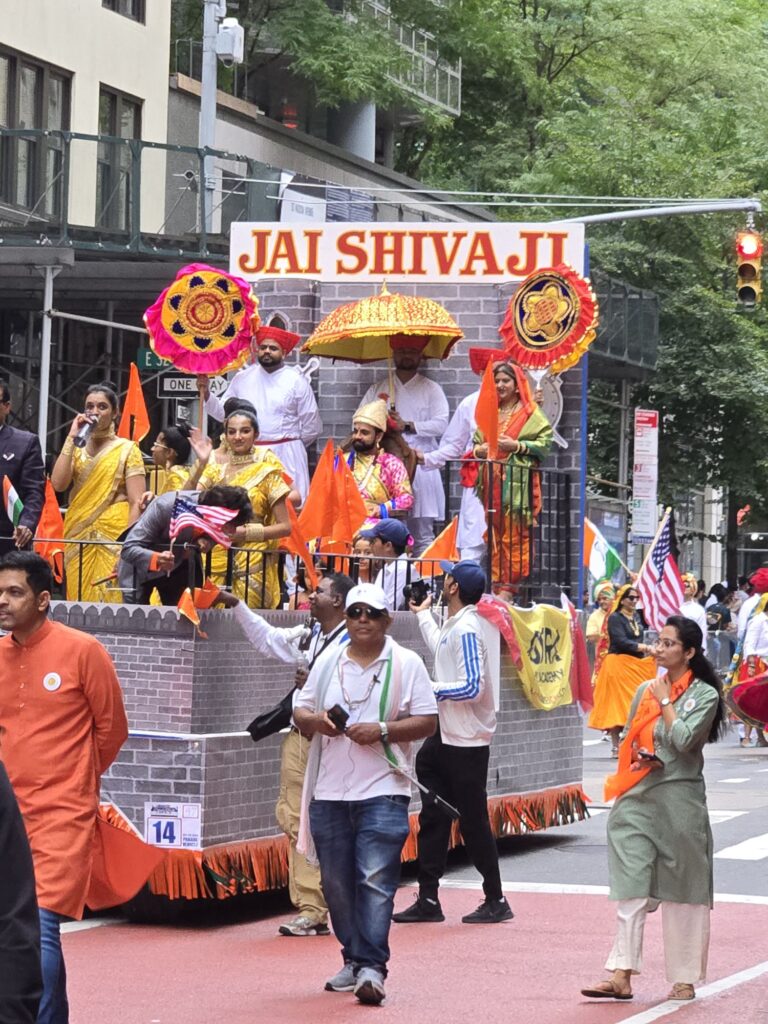
By the time the last floats disappeared down Madison Avenue, the India Day Parade had become much more than a celebration of independence. It was a portrait of India itself—Hindu, Muslim, Sikh, Christian, Buddhist and everything in between; sometimes harmonious, sometimes contradictory, but rarely dull. For a few hours in the middle of Manhattan, all those histories, identities and beliefs shared the same street.
© 2026 Hindu Herald. All Rights Reserved.
About the Author